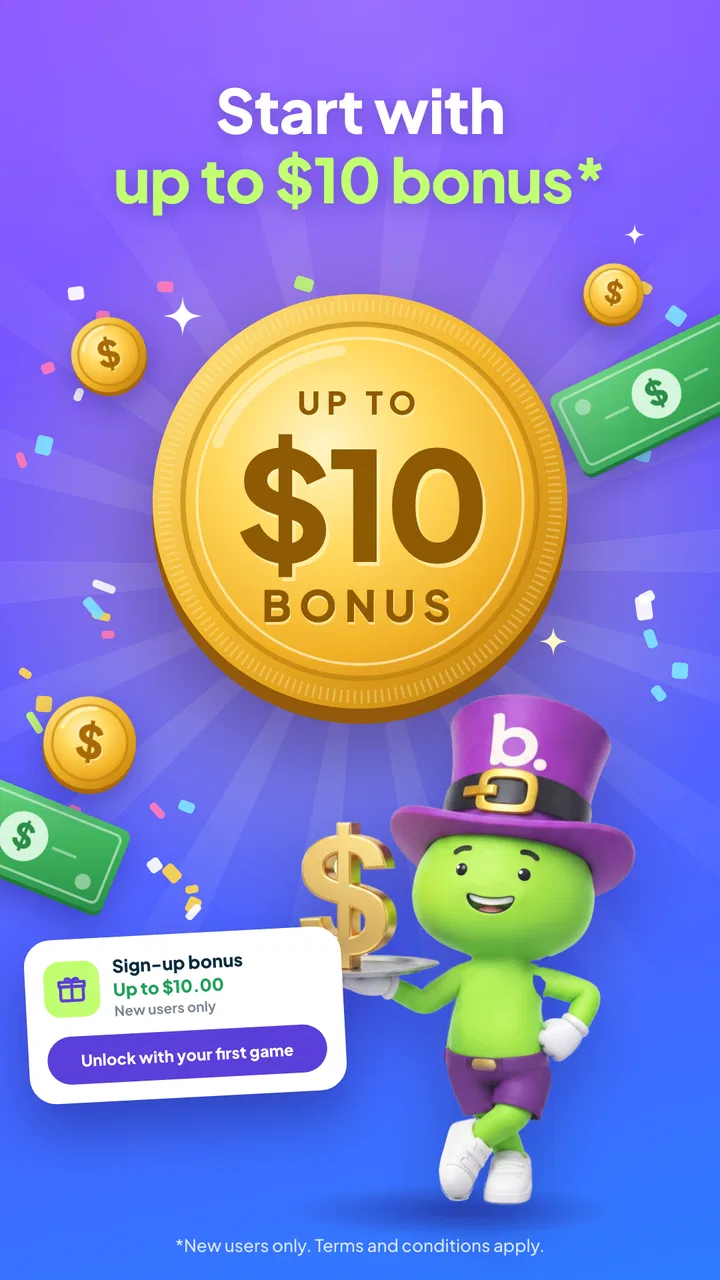
Benjamin - Earn Cash Rewards
- 3.6
- Rating
- 1.00M
- Installs
- Free
- Price

 Analysis by App-foxy
I approached Benjamin - Earn Cash Rewards as a practical shopping companion rather than a magic income source. Its basic idea is simple: use your phone for selected games and surveys, build up rewards, and eventually turn that activity into real cash. That makes it more interesting than a standard shopping app, but also less predictable. Your time is the main input, and the value of that time depends heavily on which opportunities appear for you.
The app comes from Benjamin Capital Partners, Inc and sits in the shopping category, although its day-to-day experience feels closer to a rewards hub. It is free to install, has passed the million-install mark, and carries a mature seventeen-plus age rating. I also noticed that its average score is 3.6 from roughly 131 thousand ratings, with about 29 thousand written reviews. To me, those figures suggest a large audience with mixed experiences rather than a universally smooth earning tool.
From spare time to a cash-out decision
I find the key decision is not whether an activity looks appealing, but whether its time commitment fits the spare moment I actually have. In this section, I weigh that choice against the less visible step of confirming a reward, since a task only feels worthwhile when the whole process makes sense. That naturally leads to how I would handle the final cash-out decision.
You May Also Like

 Blood Strike: 2.5 Anniversary
Blood Strike’s Loadouts Turn Every Drop Into a Tactical Gamble
A close look at Blood Strike’s custom loadouts: how fast access to signature weapons reshapes its battle royale rhythm, rewards preparation, and narrows the gap between fights.

 Pandora - Music & Podcasts
Pandora’s Music Is Easy to Start, but Harder to Recover
Pandora’s strength is its low-effort path from a seed to a station. Its weak spot is how much confidence it asks you to place in connection, setup, and quiet recovery.

 8 Ball Pool
 Is Built on Rivalries, Rematches, and Routine
A close look at the rivalries, rematches, shared routines, and unanswered safety questions that turn a quick pool match into a persistent mobile community.

 Samsung Music
’s Quiet Strength Is Playing What You Already Own
Its reach comes less from spectacle than from dependable access to a personal library. That simplicity is both the app’s strongest retention engine and its ceiling.

 AccuWeather: Weather Radar
AccuWeather Review: A Quick, Clear Forecast for Everyday Decisions
For everyday plans, the best forecast is the one you can understand quickly. AccuWeather makes rain timing, radar, and local conditions easy to act on, with a few trade-offs.

 Hill Climb Racing
Why Hill Climb Racing Still Turns Crashes Into One More Run
A tiny car, a bumpy hill and one more upgrade: Hill Climb Racing keeps resurfacing because its simple chaos makes every near-miss feel personal.
More From Our News Desk



Starting with the right expectation
The first decision is whether you want occasional rewards or dependable income. Benjamin is much better suited to the first goal. I would use it while waiting for an appointment, during a commute as a passenger, or in a quiet evening when I already planned to play a mobile game. I would not treat it like a replacement for paid work, because surveys and game tasks can vary in availability and usefulness.
The store presents the app as a way to play games, answer surveys, and earn cash. That combination is important because it gives you more than one route into the reward system. If a survey is not a good match, a game may be available instead; if I do not want to install or spend time on a game, I can check for a survey. The trade-off is that variety does not automatically mean every option is worthwhile.
Before starting, I would make one small personal rule: never begin an activity without checking what the app expects me to do and how much attention it will require. A short survey during a spare minute is a different proposition from a game task that asks for repeated play over several sessions. This simple distinction helps prevent the common rewards-app mistake of spending more time than the eventual benefit feels worth.
Choosing between surveys and games
Surveys are usually the more direct path. You answer questions, complete the assigned flow, and wait for the reward to register. The hidden cost is qualification. A survey can ask several screening questions before deciding that your profile is not suitable, so I would avoid starting one when I am in a hurry. I would also read each question carefully rather than rushing, since inconsistent answers can make the experience frustrating and may affect whether a session completes successfully.
Game offers require a different mindset. The attraction is that playing can feel less like filling out a questionnaire, but the time commitment may be harder to judge. I would treat each game as a separate project: note the starting condition, understand the target, and decide in advance how long I am willing to continue. If the objective becomes repetitive or the progress is unclear, the reward may no longer justify the effort.
A useful workflow is to test the smallest reasonable commitment first. I would not dedicate an entire week to a game immediately. I would play long enough to understand how progress is recognized, whether the activity remains enjoyable, and whether the reward path feels transparent. This is one of the most important practical differences between Benjamin and ordinary entertainment: the game is not only being judged by fun, but also by the reliability of the handoff back to the rewards account.
Following the activity from start to finish
My recommended sequence is straightforward. Open the available opportunity, read its conditions, complete the survey or begin the game, and then return to the rewards area to check whether the activity has been recognized. That last step matters. Finishing the activity in another app is not the same as seeing the reward reflected in Benjamin, so I would make verification part of the routine rather than assuming the transfer happened automatically.
For game-based tasks, I would keep the app experience as consistent as possible. Starting through the relevant offer, continuing on the same phone, and avoiding unnecessary interruptions gives the tracking process the best chance of matching the activity to the account. I am not presenting that as a guaranteed technical solution; it is simply a sensible habit when an external game and a rewards app have to recognize the same session.
Another practical tip is to record the task in a note on the phone. I would write down the game or survey name, the objective, and the point at which I started. That takes only a moment and becomes useful if the result does not appear as expected. It also stops several similar offers from blending together in my memory, especially when I try more than one activity during the same week.
The handoff between Benjamin and outside activities
The most important part of the experience is the handoff. Benjamin presents the opportunity, but a game or survey may be completed in a separate environment. That creates a gap where confusion can happen: I may believe I met the requirement while the rewards screen is still waiting for recognition, or I may have misunderstood the target in the first place.
Because of that, I would not delete a game immediately after completing an objective. I would first return to Benjamin, review the reward status, and allow reasonable time for the activity to appear. Keeping the relevant app available briefly is a small but worthwhile precaution. It also makes it easier to check the original task if I need to compare what I did with what was requested.
Surveys have their own handoff problem. A completed-looking screen does not always feel as reassuring as a clearly updated balance. I would take a screenshot of the completion screen when appropriate and keep a simple record of the date and activity. This is not glamorous, but it turns a vague “I think I finished it” situation into a more organized follow-up if the reward is delayed.
The developer is Benjamin Capital Partners, Inc, and the current version is 4.22.1. Those details matter when troubleshooting because an outdated installation can behave differently from the current release. The app supports Android 7.0 and later, which makes it accessible on many older devices, although compatibility alone does not guarantee that every external game or survey will behave identically across phones.
What the outcome feels like
The satisfying outcome is not simply earning a balance; it is completing the entire chain without losing track of the activity. I would consider a session successful when I understand what I accepted, finish it without excessive wasted time, see the reward recognized, and can move toward cashing out without guesswork. That is a much more realistic measure than judging the app by the most attractive opportunity shown on the screen.
In an everyday example, imagine that I have twenty quiet minutes before an evening commitment. I open Benjamin, find a survey that appears short enough to finish, read the screening questions, and complete it carefully. I then check the rewards area instead of closing the app immediately. If the survey does not qualify me or takes longer than expected, I stop rather than chasing the sunk time with another random activity. The app works best in that controlled, low-pressure situation.
A different scenario involves a game offer. I start it on a weekend, note the objective, and play in short sessions rather than allowing it to take over my day. After each session, I check that the activity is still progressing as expected. If the game becomes a normal game I genuinely enjoy, the reward is a welcome extra. If I am playing only because I feel trapped by the time already spent, I would quit. No reward app can make an unappealing game a good use of unlimited hours.
The cash aspect is what separates Benjamin from ordinary survey panels and casual mobile games. A survey site may focus narrowly on questionnaires, while a game-reward service may focus narrowly on playtime or milestones. Benjamin’s mix gives me more ways to look for an opportunity, but it also means I have to compare unlike tasks. A quick survey, a long game objective, and a failed qualification should not be valued as though they require the same effort.
Where the workflow breaks down
The first weak point is predictability. A free app can be easy to try, but the amount of useful activity available may change from one person to another. A survey may not match my profile, and a game may demand more patience than I expected. This is why I would judge Benjamin over several small sessions rather than one unusually good or disappointing visit.
The second weak point is the gap between activity and reward recognition. Whenever another app is involved, there is room for a missed handoff, an unclear condition, or a delayed update. I would not assume that reaching a level inside a game automatically settles the matter. I would verify the task, preserve basic evidence, and avoid spending additional time until I understand whether the previous step registered.
The third issue is attention. Benjamin can make idle time feel productive, but it can also encourage constant checking. If I find myself opening it repeatedly, accepting unsuitable surveys, or playing games I do not enjoy simply to protect a possible reward, the app has stopped serving me. Setting a time limit before starting is more useful than trying to maximize every available opportunity.
There is also a privacy and maturity consideration in the way I would use it. The mature seventeen-plus rating means I would not hand the phone to a child and assume the app is designed for them. I would read questions and prompts carefully, especially when a survey asks for personal details, and share only what I am comfortable providing. The promise of cash should never make me careless with personal information.
Who should use it, and who should skip it?
I think Benjamin is a reasonable choice for adults who enjoy trying different reward activities and can tolerate uneven results. It suits someone who already plays mobile games or occasionally answers surveys and would like those habits connected to a cash-reward system. It is also useful for people who prefer having both categories in one place instead of maintaining separate apps for surveys and game offers.
I would skip it if I need a fixed hourly return, immediate payment, or a guaranteed number of tasks every day. I would also avoid it if I dislike installing games, repeating screening questions, or keeping track of whether an external activity was credited. Someone who wants a pure shopping app should look elsewhere too; despite its category, Benjamin is primarily about earning through activities rather than simply browsing products.
Compared with a conventional cashback service, Benjamin asks for more active participation. A normal cashback tool can fit quietly into a purchase routine, while this app expects time spent on surveys or games. Compared with a dedicated survey app, it offers a broader menu but less specialization. Compared with playing a mobile game with no rewards layer, it adds a possible financial outcome but also turns leisure into a task that needs monitoring.
My practical verdict
After looking at the complete path from choosing an offer to checking the result, I see Benjamin as a useful side tool rather than a money machine. Its free entry, combination of surveys and games, and broad Android availability make it easy to test. The large install base shows that the concept has reached many people, while the middling 3.6 average tells me to approach it with realistic expectations instead of assuming every experience will be smooth.
My advice is to start with one small activity, track the handoff, and calculate whether the time felt worthwhile before committing to longer game goals. Do not confuse a visible opportunity with guaranteed earnings, and do not let an incomplete reward chase dictate your entire evening. If you enjoy the activities on their own, any cash reward feels like a bonus. If the activities are unpleasant, the app is unlikely to change that.
Benjamin is worth trying when you want flexible, occasional rewards and are willing to manage the process yourself. I would keep it for spare moments, verify every completed task, and stop using it whenever the attention required becomes greater than the value I receive. That balanced approach is the difference between a handy rewards option and an unnecessarily frustrating routine.
FAQs for Benjamin - Earn Cash Rewards
01What is Benjamin - Earn Cash Rewards and how does it work?
Benjamin - Earn Cash Rewards is a rewards app that lets users earn points or cash by completing activities such as playing selected games, trying partner apps, answering surveys, shopping through offers, or reaching specific milestones. After installing it, you normally browse the available tasks, review their requirements, and complete them through the app. Rewards depend on the offer, your location, and whether the activity is tracked correctly.
02Is Benjamin - Earn Cash Rewards legitimate and safe to use?
Benjamin may be a legitimate rewards platform, but users should still approach every earning app carefully. Before completing an offer, check its terms, tracking conditions, privacy policy, permissions, and current user feedback. Avoid providing unnecessary sensitive information, never pay money to unlock a reward, and remember that earnings are usually modest. The app’s availability, advertisers, and reward policies can also change over time.
03How much money can I realistically earn with Benjamin?
Your earnings with Benjamin depend on the number of offers available, your country, the time you spend, and the requirements of each task. Some activities may provide small rewards quickly, while game-based or promotional offers can require several days or specific progress levels. It is best viewed as a way to earn occasional extra cash rather than a dependable income source, since rewards and availability vary.
04How do I redeem rewards from Benjamin - Earn Cash Rewards?
Once your balance reaches the required minimum, Benjamin generally provides one or more redemption options shown inside the app, such as cash transfers, gift cards, or other supported services. Open the rewards or cash-out section and carefully review the eligibility rules before submitting a request. Processing times can vary, and some rewards may require account verification or accurate payment details.
05What should I do if an offer or reward is not credited?
If an activity does not appear in your Benjamin account, first confirm that you followed every requirement, used the correct offer link, and allowed the necessary tracking permissions. Do not reinstall the app or use multiple accounts before checking the offer rules, because this can affect attribution. Save screenshots, receipts, dates, and completion details, then contact in-app support through the relevant offer or help section.
Pros
- Simple tasks make it easy to earn small rewards in your spare time.
- The app offers multiple ways to earn
- including surveys
- games
- and offers.
- Reward options may include popular gift cards and other redeemable benefits.
- A low-effort interface makes navigation accessible for casual users.
- Progress and earnings can be tracked directly within the app.
Cons
- Rewards may vary by location
- account
- and available promotional campaigns.
- Some offers require purchases
- subscriptions
- or reaching specific milestones.
- Survey availability can be inconsistent
- especially for certain user profiles.
- Earnings are generally modest and should not be considered a reliable income source.
- Some tasks may involve sharing personal or demographic information.

Benjamin - Earn Cash Rewards
Gallery